
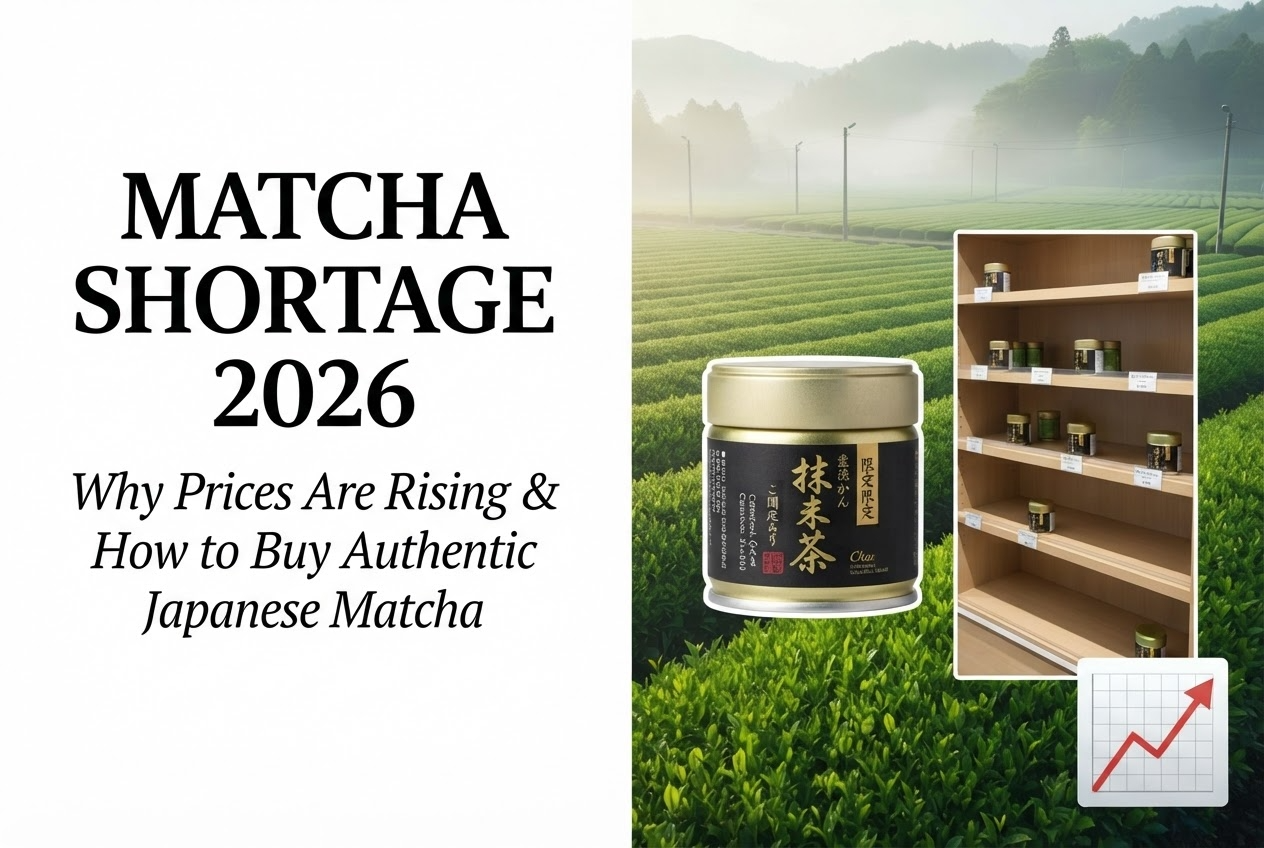
抹茶不足2026:価格上昇の理由と本物の日本産抹茶の購入方法
日本の碾茶市場で何が起こっているのか、なぜ生産量が一夜にして拡大できないのか、そして宇治、八女、掛川などの茶産地から本物の日本産抹茶を選ぶにはどうすればよいのか。
もし最近、お気に入りの日本の抹茶が手に入らなくなったり、缶の数が少なかったり、少量ずつしか販売されなくなったりしているなら、それはあなたの気のせいではありません。
日本の抹茶業界は、国際的に強い需要に恵まれている一方で、抹茶の原料となる碾茶の卸売市場は、極めて大きな圧力にさらされている。
しかし、「抹茶不足」という表現は誤解を招く可能性があります。それは、あらゆる種類の日本産抹茶が消滅したという意味ではありません。特定の生産者、地域、製品に対する需要が、業界が新しい抹茶を栽培、加工、粉砕、包装、販売するスピードを上回っているという意味です。
2026年における中心的な課題は、生碾茶の卸売市場が異常に好調である一方で、短期的な生産能力が限られていることである。本稿では、こうした業界背景について論じるものであり、日本の抹茶の小売価格がすべて高すぎると主張するものではない。
編集上の注記: Japan Heartful Storeは、本ガイドに掲載されているコレクションリンクを通じて日本の抹茶を販売しています。卸売りの碾茶市場の価格を参考に、個々の小売商品が「安い」か「高い」かを判断することはありません。商品の選択は、産地、生産者、用途、鮮度、パッケージサイズ、そして個人の好みに基づいて行うべきです。
 2026年の抹茶不足とは一体何を意味するのか?
確かに供給制約は存在するが、その状況は生産者、地域、収穫時期、製品によって大きく異なる。
人気の抹茶はすぐに売り切れます
歴史ある生産者のごく一部は、国際的に非常に注目を集め、一時的な売り切れや購入制限につながる。
碾茶の需要は異常に強い
抹茶の原料となる生茶の卸売市場は、過去最高水準に達した。
すべての抹茶が入手できるわけではありません
濃茶製品のうち1種類が入手困難な場合でも、薄茶やラテ用の本格的な日本産抹茶は引き続き入手可能な場合があります。
一保堂茶は、特に日本国外での抹茶への関心の高まりが、業界全体での供給不足の一因となっていると公式に説明した。同社は、より多くの顧客に商品を提供し、転売目的の大量購入を抑制するため、購入制限を設けた。
同様の販売制限や一時的な売り切れは、他の人気日本の抹茶メーカーでも見られる。
最も正確な解釈はこうだ。供給不足は特定の生産者と製品に集中しており、上流の卸売碾茶市場では異常なほどの強い需要が発生している。これは、すべての日本産抹茶が入手不可能になっているという主張ではない。
 重要な課題:日本の生碾茶市場
抹茶不足を理解するためには、生の碾茶と、缶や袋に入れて販売されている完成品の抹茶を区別することが重要です。
碾茶は、特別に栽培・加工された茶葉で、後に精製・粉砕されて抹茶となる。農家、農業団体、茶葉メーカー、加工業者、その他の関連企業の間で取引され、最終的に小売製品となる。
2026年の茶シーズンに関する業界報告によると、主要生産地域における碾茶の卸売市場平均価格は、過去の基準値を大幅に上回った。
これは店舗での小売価格を示すものではありません。卸売碾茶市場の価格は、農産物原料に関するものです。ジャパンハートフルストアやその他の小売店で販売されている完成品の抹茶の価格と直接比較するものではありません。
抹茶製品の完成には、以下の追加工程が含まれます。
生産者の専門知識、茶葉の選定、挽き方、ブレンド方法、品質管理、包装、鮮度管理、そして用途など、すべてが最終製品に影響を与える。
そのため、同じシーズンに仕入れた碾茶から作られた2つの製品は、必ずしも同じ特徴や販売上の位置づけを持つとは限らない。
なぜ日本はすぐに抹茶の生産量を増やせないのか?
いくつかの相互に関連する要因が、日本の茶業界が世界的な需要の急増に迅速に対応できるかどうかを制限している。
茶畑が成熟するまでには何年もかかる
茶は多年生作物です。一保堂によると、植え付けから新茶が完成品として楽しめるようになるまでには、少なくとも5年はかかります。
碾茶には適切な栽培方法が必要です
抹茶用の茶葉は、計画的な遮光、適切な収穫、そして碾茶専用に設計された加工方法を必要とする。
処理能力には限りがあります
新鮮な茶葉は、碾茶を作るための設備を備えた施設で速やかに加工されなければならない。茶葉の量が多いだけでは、使える抹茶の量が増えるとは限らない。
研削と品質管理には時間がかかる
碾茶は、精製、選別、必要に応じてブレンド、粉砕、検査、包装され、劣化から保護されなければならない。
天候はあらゆる収穫に影響を与える
気温、降水量、霜、暑さ、そして新芽の生育時期は、茶の収穫量と葉の状態の両方に影響を与える可能性がある。
需要は集中している
海外のバイヤーは、日本の茶市場全体を開拓するよりも、同じ有名生産者や製品を優先的に狙う傾向がある。
抹茶は碾茶から作られており、普通の粉末煎茶とは違います。
日本の茶業界の緑茶表示基準では、抹茶は碾茶を茶筅またはそれに類する粉砕器具を用いて微粉末に挽いて作られる。
碾茶用の茶葉は、一般的に収穫前に日陰で栽培され、蒸して乾燥させますが、煎茶のように揉み込む工程は行いません。精製後、碾茶は粉末状に挽かれて抹茶になります。
したがって、「緑茶粉末」とだけ表示された製品は、必ずしも抹茶とは限りません。
石臼挽きについて:伝統的な石臼挽きは高く評価されていますが、現代の日本の生産者は他の適切な挽き方を用いる場合もあります。真正性は、碾茶の使用、産地、生産者の追跡可能性、加工情報、ラベル表示などから判断されるべきであり、単なる宣伝文句だけで判断すべきではありません。
抹茶ブームは他の日本茶にも影響を与えている。
農家や工場は、土地、労働力、加工能力に限りがある。碾茶の生産量が増えると、煎茶やその他の日本茶の生産量が減る可能性がある。
2026年の業界報告によると、碾茶生産へのシフトは、他の日本茶の供給状況にも影響を与えていることが明らかになった。したがって、抹茶ブームの影響は抹茶そのものにとどまらない。
抹茶の入手性は改善されるだろうか?
日本の茶業界は既に国際的な需要に対応し始めている。
考えられる長期的な変化としては、以下のようなものがある。
- 碾茶生産用に管理された新しい畑
- 既存の茶畑の一部を転換する
- 碾茶加工施設への投資
- 追加の精製および粉砕能力
- 最も有名な地域以外の生産地域での成長
- 地域生産者の国際的な認知度向上
鹿児島県は既に日本の碾茶生産においてますます重要な位置を占めるようになっている。今後、他の茶産地も産業の発展に伴い、より大きな役割を担うようになるかもしれない。
しかし、本格的な農業拡大には時間がかかる。茶の木が成熟するには何年もかかるし、加工施設、熟練した労働者、品質管理システム、長期的な供給関係なども一夜にして構築できるものではない。
購入者が留意すべき点:一部の商品については入手状況が改善される可能性がありますが、特に国際的に人気の高いメーカーや生産量が限られている抹茶については、一時的な品切れや購入制限が続く可能性があります。
本物の日本産抹茶を購入する方法
品薄状態が続くと、購入者は曖昧な説明、紛らわしい等級用語、あるいは茶葉の産地を明確に示さずに日本のイメージを使用した製品に遭遇する可能性がある。
以下のチェック項目は、価格や外観だけを判断するよりも信頼性が高い。
原産国を確認してください
「日本製」「原産国:日本」「日本産緑茶」などの明確な表示を探してください。
原材料を読んでください
純粋な抹茶には通常、「緑茶」「抹茶」「碾茶」といったシンプルな原材料表示がされているはずです。
責任のある企業を特定する
パッケージデザインだけに頼るのではなく、生産者、加工業者、輸入業者、販売業者を追跡できるかどうかを確認してください。
使用目的を確認してください
薄茶、濃茶、ラテ、料理など、生産者が推奨する用途は、漠然とした等級表示よりも役に立つ。
保管情報を確認する
本物の抹茶でさえ、熱、光、酸素、湿気、または強い臭いにさらされると劣化する可能性がある。
Choose a practical size
Select an amount you can finish while the matcha is still fresh rather than assuming a larger package is always better.
Country of origin is more important than Japanese-style packaging
Descriptions such as “Japanese-style,” “inspired by Kyoto,” or “packed using Japanese methods” do not necessarily mean that the tea leaves were grown in Japan.
A company outside Japan can sell genuine Japanese-grown matcha, while Japanese words or imagery alone do not prove origin. Check the origin of the tea itself.
Japan Introduced New Protection for “Japanese Tea”
On July 10, 2026, Japan’s Ministry of Agriculture, Forestry and Fisheries registered Japanese Tea under the Geographical Indication protection system.
The registered product is defined as tea made from Japanese-grown tea leaves and processed in Japan. The protected names include Nihon Cha, Nippon Cha, Japanese Tea, and Japan Tea.
The Japan Tea Central Public Interest Incorporated Association explained that the registration responds partly to foreign-grown products being sold with regional Japanese names such as “Uji matcha” and “Shizuoka sencha.”
Proper use of the GI mark can support traceability. However, the absence of the mark does not automatically mean that a product is inauthentic, because businesses must complete the relevant notification and compliance procedures before using it.
Do not rely only on “ceremonial grade”
“Ceremonial grade” is widely used in international matcha marketing, but it is not one universal Japanese government-controlled grade.
Product descriptions from the producer—such as whether the matcha is recommended for usucha or koicha—are generally more useful than the word “ceremonial” by itself.
Color is a clue, not proof
Fresh matcha is commonly associated with a lively green color, while exposure to heat, oxygen, moisture, and light can cause deterioration.
However, color alone cannot prove:
- Japanese origin
- freshness
- cultivar or harvest
- koicha suitability
- overall flavor quality
- absence of additives
Lighting, cameras, screens, and image editing can also change how matcha appears online. Use color together with origin, ingredients, producer information, and storage details.
Price is not an authenticity test: The retail price of a finished product varies according to producer, use, package size, processing, packaging, availability, and many other factors. Authenticity should be judged from traceability and labeling rather than price alone.
Explore Japanese Matcha Beyond One Producer or Region
The matcha shortage has focused international attention on a small number of famous Kyoto producers. However, authentic Japanese matcha is not limited to one city, prefecture, or company.
Exploring different regions can help buyers find a matcha suited to their preparation style without depending entirely on one limited product.
Uji Matcha
Uji tea is associated with the historic tea culture of southern Kyoto, including shaded cultivation, tea refinement, blending expertise, and Japanese tea ceremony traditions.
Uji producers offer matcha intended for usucha, koicha, tea practice, daily drinking, lattes, gifts, and confectionery.
Explore Uji MatchaYame Matcha
Yame is especially famous for high-quality gyokuro, but the region also produces matcha. Yame tea is commonly associated with umami, body, mellowness, and a refreshing aroma.
Japan Heartful Store sources its Yame matcha selection from Hoshino Seicha in the Yame tea region.
Explore Hoshino SeichaKakegawa Matcha
Kakegawa belongs to one of Japan’s leading tea-producing prefectures. Although widely known for sencha and deep-steamed tea, local producers also cultivate tea for tencha and matcha.
Depending on the product, Kakegawa matcha may be suitable for drinking, lattes, cooking, or confectionery.
Explore Kakegawa MatchaOrigin does not guarantee one fixed flavor. Producer, cultivar, harvest, shading, tencha processing, blending, storage, and preparation may influence the final bowl as much as the regional name.
For a more detailed regional comparison, read Uji Matcha vs Yame Matcha: Flavor, Origins, and How to Choose .
Discover Japanese Matcha by Region and Purpose
Compare Japanese matcha for usucha, koicha, lattes, daily drinking, gifts, and culinary preparation without relying on one producer or one regional name.
Should You Stockpile Matcha?
Generally, no. Buying one or two unopened packages that you reasonably expect to use is different from purchasing a large quantity because of shortage headlines.
Better buying habits
- Choose a package size you can finish while fresh.
- Consider another matcha from the same producer.
- Explore Uji, Yame, Kakegawa, and other regions.
- Use different matcha for traditional tea and lattes.
- Store opened and unopened matcha carefully.
What to avoid
- Buying more matcha than you can reasonably use.
- Opening several tins at the same time.
- Storing matcha near heat, humidity, or strong odors.
- Purchasing from an untraceable resale account.
- Assuming one sold-out product is the only suitable choice.
Matcha is sensitive to oxygen, moisture, heat, sunlight, and strong odors. A smaller package that you finish promptly may offer a better experience than a large package kept open for an extended period.
Learn more in our complete guide to storing matcha powder .
How to Choose Matcha by Intended Use
During periods of limited availability, the most useful matcha is not necessarily the most famous product. It is the matcha that suits how you actually plan to prepare it.
Koicha
Choose a producer-designated koicha matcha with sufficient depth and limited harshness. Check the producer’s recommendation rather than relying only on “ceremonial grade.”
Usucha
Look for a balanced matcha specifically recommended for thin-tea preparation, daily drinking, or tea practice.
Matcha Latte
Choose enough aroma and body to remain noticeable after milk is added. A koicha-focused product is not always necessary for a latte.
Baking and Desserts
Select a matcha intended for mixing, heating, or larger-quantity culinary preparation.
Beginners
Start with a clearly described usucha or daily-drinking matcha and learn how water temperature and dosage affect flavor.
Gifts
Prioritize a traceable producer, practical package size, appropriate intended use, and clear storage information.
If your matcha tastes too bitter: Water that is too hot, too much powder, insufficient water, poor storage, or an unsuitable preparation method may be responsible. The regional name or product itself is not always the cause.
Read our guide: Why Is My Matcha Bitter? Seven Causes and How to Fix Them .
Final Verdict
Understand the tencha market—but choose matcha by quality, purpose, and traceability
The 2026 matcha shortage is best understood as pressure on Japan’s raw tencha market combined with strong demand for specific producers and products.
It should not be interpreted as a judgment that every retail matcha is expensive, nor should the wholesale tencha market be directly compared with the price of a finished product.
When choosing authentic Japanese matcha:
- Verify the country of origin.
- Check the ingredients.
- Look for a traceable producer or responsible seller.
- Confirm that it is matcha made from tencha.
- Choose according to usucha, koicha, latte, or culinary use.
- Do not rely only on color or “ceremonial grade.”
- Select a package size you can keep fresh.
- Explore more than one Japanese region or producer.
Japan Heartful Store carries Japanese matcha from different tea traditions, including Uji matcha, Yame matcha from Hoshino Seicha, and Kakegawa matcha from Shizuoka.
Frequently Asked Questions
Is there really a matcha shortage in 2026?
There are genuine supply constraints, particularly for popular Japanese producers and limited-production products. At the same time, not every Japanese matcha is unavailable. The shortage varies by producer, region, product, and intended use.
What is causing the matcha shortage?
Major factors include rapid international demand, pressure on the wholesale tencha market, the time required to develop new tea fields, limited tencha-processing capacity, weather, labor, grinding, packaging, and concentrated demand for famous producers.
What is tencha?
Tencha is the specially cultivated and processed tea used to make matcha. It is generally shaded before harvest, steamed, and dried without the rolling process used for sencha. After refinement, it is ground into matcha.
Do wholesale tencha market results determine retail matcha prices?
No. Wholesale tencha is a raw agricultural material. A finished product also involves refining, blending, grinding, quality control, packaging, storage, transportation, producer positioning, package size, and other factors.
How can I tell whether matcha is really from Japan?
Check the country of origin, ingredients, producer or responsible seller, and product labeling. Japanese imagery or Japanese words alone do not prove where the tea was grown.
What does the Japanese Tea GI mark mean?
Japan registered “Japanese Tea” as a Geographical Indication in July 2026. The registered product uses Japanese-grown tea leaves and is processed in Japan. The absence of the mark does not automatically mean that a product is inauthentic.
Is ceremonial grade an official Japanese grade?
It is not one universal Japanese government-controlled grade. Compare origin, producer, ingredients, freshness, and recommended preparation instead.
Does authentic matcha have to be stone-ground?
Matcha is made by finely grinding tencha. Traditional stone milling is valued, but it is not the only suitable grinding method used by modern producers. Stone grinding alone does not prove authenticity.
Is Uji the only region producing authentic Japanese matcha?
No. Matcha and tencha are produced in several Japanese regions, including Kyoto, Fukuoka, Shizuoka, Kagoshima, Aichi, Mie, and Shiga.
Should I buy matcha in bulk during the shortage?
Only buy an amount you can store correctly and finish while fresh. For many home drinkers, smaller packages are more practical after opening.
Will matcha availability improve?
Production and processing capacity may expand over time, but new tea fields and facilities take years to develop. Temporary sellouts may continue for particularly popular products.
Sources and Editorial Basis
- Japan Ministry of Agriculture, Forestry and Fisheries: Japanese Tea GI Registration
- MAFF: Registration of Japanese Tea and Other GI Products
- Japan Tea Central Public Interest Incorporated Association: Japanese Tea GI
- Japan Tea Central Public Interest Incorporated Association: Green Tea Labeling Standards
- Global Japanese Tea Association: Japanese Tea Report, May 2026
- Ippodo Tea: Matcha Shortage and Japanese Tea Industry Conditions
- MAFF: 2025 First-Harvest Tea Production
- Official Yame Tea Information
市場データに関する注記:この記事は、業界の背景を説明するために卸売りの碾茶の供給状況について論じています。ジャパンハートフルストアやその他の小売店で販売されている抹茶の小売価格を評価または批判するものではありません。商品の在庫状況は変動する可能性があります。