
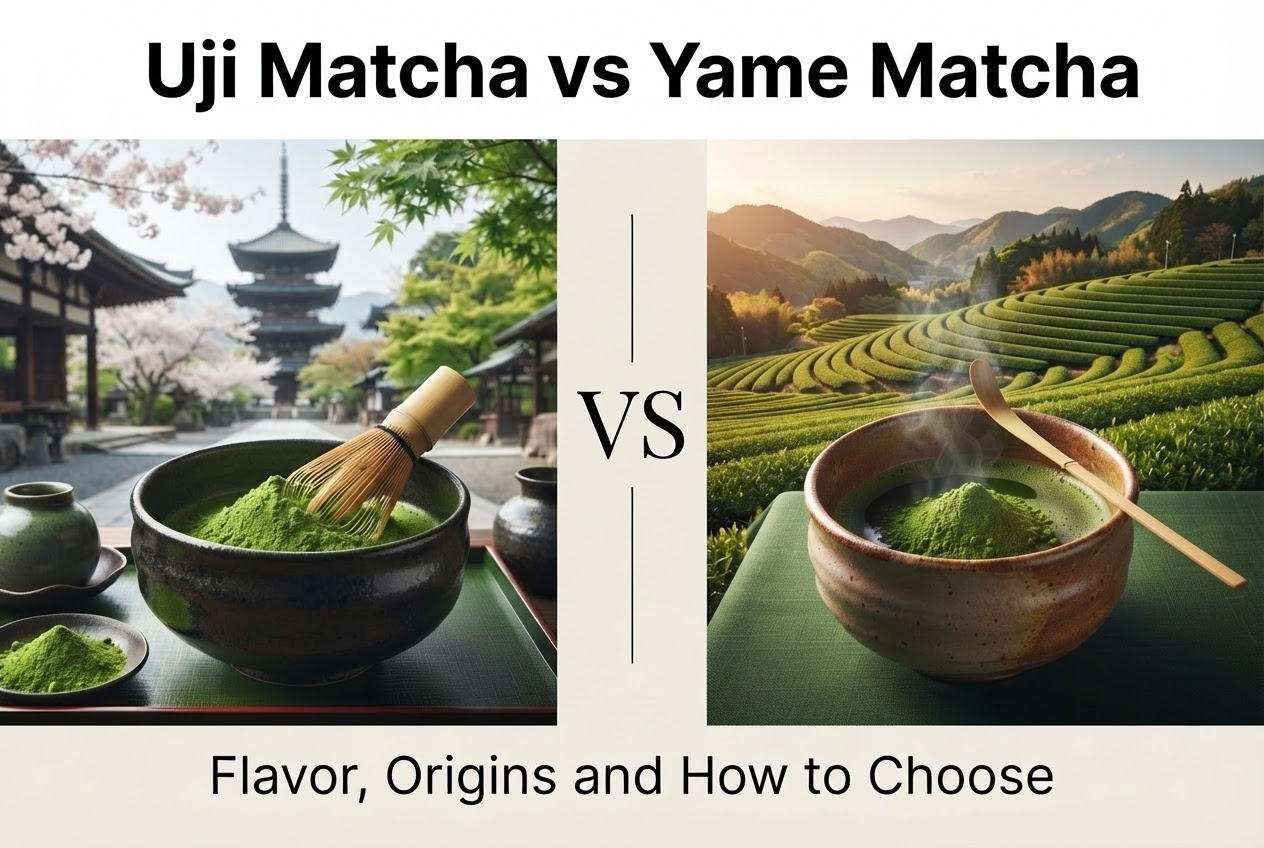
Uji Matcha vs Yame Matcha
Compare their origins, commonly associated flavor tendencies, preparation uses and representative producers before choosing your next Japanese matcha.
Choose Uji matcha for tradition and variety
Uji tea has a long association with shaded cultivation, tea blending and Japanese tea culture. Available products range from approachable usucha matcha to richer options intended for koicha.
Choose Yame matcha for a different regional expression
Yame tea is officially associated with umami, body, mellowness and a refreshing aroma. Hoshino Seicha offers several Yame matcha grades for different uses.
Editorial disclosure: Japan Heartful Store sells products featured in this guide. This article compares them using producer information, official regional sources and verified product details. It does not claim to be a blind tasting or a long-term hands-on review.
Uji Matcha vs Yame Matcha at a Glance
Uji and Yame are two important names in Japanese tea, but the region printed on a product does not tell you everything about how its matcha will taste.
Producer, cultivar, harvest, shading, blending, tencha processing, storage and preparation all influence the final bowl. It is therefore more accurate to discuss common regional associations than to promise that every Uji or Yame matcha will share one fixed flavor.
| Comparison point | Uji matcha | Yame matcha |
|---|---|---|
| Regional association | Kyoto’s historic Uji tea tradition | Yame tea region in Fukuoka Prefecture |
| Officially described qualities | Umami, mildness, low astringency, color and aroma | Umami, body, mellowness and refreshing aroma |
| Producer examples | Yamamasa Koyamaen and Marukyu Koyamaen | Hoshino Seicha |
| Product range | Usucha, koicha, daily drinking, lattes and culinary use | Multiple grades for usucha, koicha and special occasions |
| Best selection method | Choose by the individual product and recommended use, not by origin alone. | |
What Is Uji Matcha?
Uji tea is connected to the historic tea-producing culture of southern Kyoto. However, the recognized Uji tea production area is broader than Uji City alone. Kyoto tourism information explains that Uji tea may use tea grown in Kyoto and the neighboring prefectures of Nara, Shiga and Mie, then processed in Kyoto by Kyoto tea producers using methods associated with the Uji tradition.
Matcha is made from tencha. The leaves are shaded before harvest, steamed, dried without the rolling process used for sencha, refined and ground into powder.
Shading limits light before harvest. This affects the leaf’s chemical composition and is associated with more umami, lower astringency and deeper green color. It is important to note that shaded cultivation is not exclusive to Uji; it is a fundamental part of matcha and gyokuro production in other regions as well.
Long tea history
Southern Kyoto has centuries of documented tea cultivation and processing history.
Blending expertise
Uji tea culture includes the practice of blending teas to create a consistent desired character.
Wide product selection
Uji producers offer matcha intended for usucha, koicha, tea practice, lattes and food preparation.
International recognition
Uji is one of the most widely recognized Japanese tea names among international matcha buyers.
What Is Yame Matcha?
Yame tea comes from Fukuoka Prefecture, with production centered around the Yame region. Fukuoka Prefecture describes Yame tea as having umami and body, a mellow taste and a refreshing aroma.
The region is particularly well known for high-quality gyokuro, but it also produces matcha. Hoshino Village, located in the mountainous part of Yame, is closely associated with premium tea production and is home to Hoshino Seicha.
Some drinkers and sellers describe individual Yame matcha products as nutty, toasted or warm in aroma. These can be useful tasting descriptors for a specific product, but they should not be treated as a guaranteed flavor of every Yame matcha.
Important distinction: Yame is a tea-producing region, not a single flavor profile. Matcha from two Yame producers—or even two grades from the same producer—may differ noticeably.
Can Origin Predict How Matcha Will Taste?
Origin provides useful context, but it is not a complete tasting note. The following factors may have as much influence as the regional name:
- Cultivar: Different tea cultivars can produce different levels of aroma, sweetness, umami and astringency.
- Harvest and leaf selection: Harvest timing and the leaves selected influence color, texture and flavor.
- Shading: Duration and method affect the balance of umami and astringency.
- Tencha processing: Steaming and drying affect color, aroma and stability.
- Blending: Producers may combine tencha lots to create a particular style.
- Storage: Heat, humidity, light, oxygen and strong odors can reduce matcha quality.
- Preparation: Water temperature, ratio and whisking method can change the perceived bitterness and body.
About “ceremonial grade”: This term is widely used commercially, but it is not a single legally standardized Japanese grading system. For buying decisions, pay closer attention to the producer’s recommended use, such as usucha or koicha, and to the specific product description.
Five Uji and Yame Matcha Products to Compare
The following products illustrate different positions within the two regions. These descriptions are based on producer information and verified product details rather than an independent blind tasting.
Seiju
 Hoshino Seicha Seiju
Seiju is presented as Hoshino Seicha’s highest-grade matcha. It is intended for customers seeking a refined Yame matcha for traditional preparation, special occasions or gifts.
View SeijuHoshi no Tsuyu
 Hoshino Seicha Hoshi no Tsuyu
Hoshi no Tsuyu is recommended for usucha, everyday tea practice and pairing with sweets. Its product information emphasizes a balance of umami, soft bitterness and matcha aroma.
View Hoshi no TsuyuOgurayama
 Yamamasa Koyamaen Ogurayama
Ogurayama is an approachable choice for buyers looking for a Yamamasa Koyamaen matcha suitable for usucha and regular home preparation. Multiple package sizes may be available.
View OgurayamaTennouzan
 Yamamasa Koyamaen Tennouzan
Tennouzan is positioned as a fuller-bodied option with pronounced sweetness, deep umami and a long finish. It is suitable for buyers seeking a matcha that can be prepared as koicha as well as usucha.
View TennouzanIsuzu
Marukyu Koyamaen Isuzu
Marukyu Koyamaen describes Isuzu as balancing a refreshing aroma, astringency, mellow umami and slight bitterness. It is recommended primarily for usucha and can also be mixed with milk or cream.
View IsuzuExplore Matcha from Uji and Yame
Compare individual products by producer, recommended preparation and current availability.
Explore Hoshino Seicha Explore Uji MatchaBest Uses: Usucha, Koicha, Lattes and Gifts
For usucha
Usucha is the most flexible place to begin. Hoshi no Tsuyu is recommended for everyday thin tea and tea practice. Ogurayama and Isuzu are also practical starting points for buyers who want to explore Uji matcha.
For koicha
Koicha uses more matcha and less water than usucha, so product selection matters. Choose a matcha the producer or seller specifically identifies as suitable for koicha. Tennouzan is one option in this guide with a stated koicha use.
For matcha lattes
Do not choose a latte matcha by origin alone. Look for enough aroma, body and bitterness to remain noticeable after milk is added. Isuzu is explicitly described by Marukyu Koyamaen as suitable for milk or cream.
For preparation instructions, read our matcha latte guide.
For gifts
Consider the recipient’s experience level, preferred preparation and package size. A higher-positioned matcha such as Seiju may suit a special occasion, while an usucha-oriented product can be more practical for someone who drinks matcha regularly.
Who Should Choose Uji or Yame Matcha?
Choose Uji matcha if:
- You want to explore Kyoto’s historic tea tradition.
- You want a broad choice of producers and product levels.
- You need a clearly identified usucha or koicha option.
- You are comparing Yamamasa Koyamaen and Marukyu Koyamaen.
Choose Yame matcha if:
- You want to explore matcha from Fukuoka Prefecture.
- You are interested in Hoshino Seicha’s matcha range.
- You enjoy comparing regional Japanese tea traditions.
- You want an alternative to the more internationally familiar Uji name.
Final Verdict
Choose the product—not only the region
Uji is the natural starting point for buyers interested in Kyoto’s historic matcha culture and a wide selection of established producers. Yame offers another important regional expression of Japanese tea, particularly through producers such as Hoshino Seicha.
Neither origin is automatically better, sweeter, greener or less bitter. The individual producer, grade, recommended preparation and storage condition are more useful buying signals than the regional name alone.
For everyday usucha, compare products such as Ogurayama, Isuzu and Hoshi no Tsuyu. For a product intended to support koicha preparation, consider Tennouzan.
Frequently Asked Questions
What is the main difference between Uji and Yame matcha?
The main objective difference is origin and tea-making tradition. Uji tea is associated with Kyoto and its historic processing and blending culture, while Yame matcha comes from the Yame tea region of Fukuoka. Flavor still varies by producer, cultivar, grade and preparation.
Is Uji matcha better than Yame matcha?
No origin is universally better. Uji offers a broad selection from well-known Kyoto producers, while Yame offers products from producers such as Hoshino Seicha. Compare individual products and their recommended uses.
Is Yame matcha always roasted or nutty?
No. Some individual Yame matcha products are described as nutty, toasted or warm in aroma, but this is not a guaranteed characteristic of every Yame matcha. Processing, cultivar, harvest and preparation all affect aroma.
Which origin is less bitter?
Origin alone cannot determine bitterness. Product grade, shading, cultivar, water temperature and matcha-to-water ratio all matter. Using water that is too hot can make either Uji or Yame matcha taste more bitter.
Which matcha is better for lattes?
Choose a specific product with enough body and aroma to remain noticeable with milk. Marukyu Koyamaen explicitly recommends Isuzu for mixing with milk or cream. Other products may also work, depending on the flavor and strength you prefer.
Which matcha should a beginner try first?
Start with a product recommended for usucha rather than selecting by origin alone. Ogurayama, Isuzu and Hoshi no Tsuyu are relevant options to compare in this guide.
Sources and Editorial Basis
- Kyoto Tourism: The Basics of Uji Tea
- Fukuoka Prefecture: Yame Tea History and Characteristics
- Fukuoka Yame Tea Promotion Council: Characteristics of Yame Tea
- Hoshino Seicha official website
- Yamamasa Koyamaen official matcha information
- Marukyu Koyamaen official Isuzu product information
Product availability can change. Use the linked product or collection pages to view the current selection.